

Clean a Workout Bench the Right Way
Weight benches are a shared skin-contact surface—sweat, skin oils, and hands all day long. And because they look clean even when they aren’t, benches are one of the easiest places for “gym funk” to move from one person to the next.
This guide breaks it down simply: what’s actually on benches, how often to clean, the right tools, and a routine that works for both home gyms and commercial gyms.
Quick safety note: follow the bench manufacturer’s directions, and don’t soak padding or use harsh chemicals that can crack or dry out vinyl.
Why Workout Benches Get Gross Fast (And Why It Matters)
Benches are high-contact surfaces
Benches take constant contact where it matters:
-
Back, shoulders, and neck on the pad
-
Hands on the edges while you sit down, brace, or stand up
-
Bare skin contact in summer or when people wear tanks and shorts
And most people do the same thing: finish a set, wipe sweat with a towel (or their shirt), and move on. That removes moisture, but it doesn’t “reset” the surface.
What germs can live on benches (high-level, non-alarmist)
You don’t need to be paranoid to be realistic. Benches can carry:
-
Skin bacteria (common on everyone)
-
“Gym funk” microbes like bacteria and fungi that thrive with sweat, clothing, and warm surfaces
-
Viruses that transfer via hands to surfaces, especially during cold/flu season when people touch their face and then touch equipment
The goal isn’t perfection. It’s reducing transfer and keeping shared surfaces from becoming a revolving door.
Why cleaning matters beyond “smell”
Cleaning benches isn’t just about odor control:
-
It reduces transfer between users
-
It helps protect small cuts, razor bumps, and friction spots from getting irritated or turning into bigger issues
-
It keeps upholstery from breaking down—salt + sweat + grime is rough on vinyl and seams over time
What Counts as “Clean” (Not Just “Looks Wiped”)
The difference between wiping sweat and disinfecting
Sweat removal ≠ surface disinfection.
A dry towel mainly moves moisture around. It can make a bench look fine, but it doesn’t reliably remove what’s left behind from skin contact and hands—especially along seams and edges where grime builds up.
Contact time and coverage (simple explanation)
To actually clean a shared surface, you need:
-
Full coverage (not just the middle of the pad)
-
Enough time for the product to work (not a one-second swipe)
Most gyms fail here: quick swipe, then the next person sits down immediately. That’s not a cleaning system—it’s theater.
What You Need to Clean Weight Benches Properly
The two-tool setup (recommended)
You only need two tools to do this right:
-
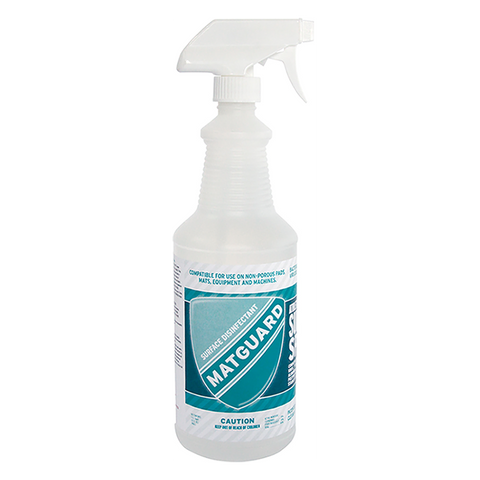
Matguard Surface Spray for full coverage on larger areas and seams
-
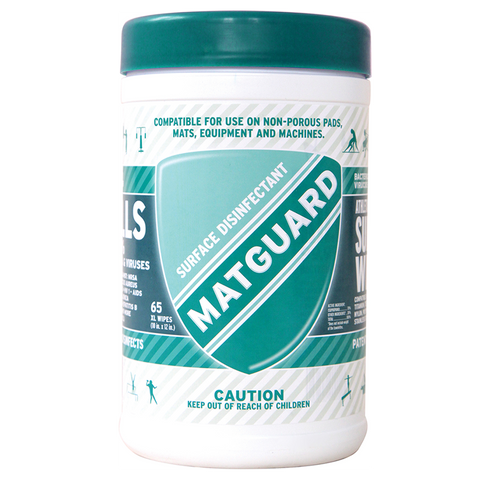
Matguard Athletic Equipment & Surface Wipes for fast wipe-downs between users and high-touch points
Spray gives you coverage. Wipes give you speed. Together, it’s a simple routine people will actually follow.
What to avoid
A few common mistakes that ruin benches (and don’t clean as well as people think):
-
Bleach-heavy or overly harsh cleaners that can crack/dry vinyl
-
Abrasive pads that damage upholstery
-
Soaking foam/padding (it traps moisture and can make odor and breakdown worse)
Optional extras (for gym owners/managers)
If you run a facility, these make consistency easier:
-
Microfiber cloths for drying (when needed)
-
Gloves for staff cleaning rotations
-
A small “cleaning caddy” at each training zone so supplies aren’t across the room
How to Clean a Workout Bench (Step-by-Step)
Step 1: Clear and inspect
Remove any accessories, towels, or bands. Then do a quick check for tears, cracks, or peeling areas—those spots collect grime and are harder to keep clean.
Step 2: Pre-wipe if it’s visibly sweaty
If the bench is wet or visibly dirty, do a quick wipe first. The goal is to remove grime so the disinfectant can contact the surface evenly instead of fighting through a layer of sweat and oil.
Step 3: Disinfect the bench top, sides, and seams
Hit the whole “contact zone,” not just the center.
-
Spray: apply an even coat across the pad surface, then pay attention to seams/stitched edges and the underside lip where hands and clothing drag.
-
Wipes: use them on edges, handles, adjustment knobs/pins, and other high-touch points people grab without thinking.
Step 4: Let it sit (don’t rush it)
Let the product do the work. Avoid immediately using the bench right after application—this is where most people undo the whole process.
Step 5: Air dry or wipe dry (if needed)
Air drying is fine. If the surface is too wet or you’re turning benches fast, wipe dry for comfort and to avoid slipping—just don’t skip the “let it sit” moment.
Keep Matguard Athletic Equipment & Surface Wipes near the bench area for quick wipe-downs, and use a Surface Spray for deeper daily cleaning.
Cleaning Frequency: Home vs Commercial Gyms
Home gym baseline
Home benches don’t have the same traffic, but sweat still builds up.
-
Clean after sweaty sessions
-
Do a weekly deeper clean for all benches (including seams and touchpoints)
Commercial gym baseline
In a shared setting, the cadence needs to be tighter:
-
Between users: quick wipe-down
-
Daily closing: full disinfect (pad + seams + touchpoints)
-
Weekly detail clean: frames, adjustment rails, storage areas, and the surrounding zone
If there’s a skin infection going around
Don’t guess—tighten the system:
-
Increase cleaning cadence
-
Add simple signage
-
Make sure supplies are stocked where people actually walk and lift
Don’t Forget These Bench Touchpoints (Where Germs Actually Spread)
High-touch areas people miss
Most people wipe the pad and forget the parts hands touch all day:
-
Edges people grip to sit/stand
-
Adjustment levers, pins, knobs
-
Foot rollers and leg developer pads (if attached)
-
Frame crossbars where hands rest
Nearby surfaces that matter
Benches don’t exist alone:
-
Dumbbell handles returned near benches
-
The floor around benches (sweat drops, bags, towels)
If the bench is clean but the zone is filthy, the bench won’t stay clean long.
Material-Specific Notes (So You Don’t Ruin the Bench)
Vinyl/PU leather benches
-
Avoid harsh chemicals and over-wetting
-
Clean seams gently—don’t grind cleaner into stitching
Fabric benches (less common)
Fabric absorbs more. Use light spray and controlled drying. Don’t saturate the material.
Cracked/peeling upholstery
Cracks and peeling areas are harder to keep clean because grime gets inside the damage.
-
If it’s peeling badly in a shared gym, replacement can be the safer move
-
At minimum, clean more frequently and monitor those damaged areas closely
Gym Owner Playbook: Make Cleaning Actually Happen
Put supplies where behavior happens
If wipes and spray aren’t within arm’s reach, people won’t use them. Put them at each zone—not one cleaning station across the room.
Simple signage language
Keep it short and direct:
-
“Wipe bench after use.”
-
“Clean handles/knobs too.”
Staff closing checklist
A real closing routine hits:
-
Benches (pads + seams)
-
Frames, rails, and pins
-
Nearby racks and dumbbells returned to the zone
-
Quick floor spot-check around benches
Accountability without being annoying
Assign zones, keep quick logs, and set a restock rhythm. The goal is consistency, not a complicated compliance program.
Common Mistakes (And How to Fix Them)
-
Only wiping the top pad and ignoring seams/edges
-
Using a dirty towel as the “cleaning method”
-
Spraying and immediately sitting down
-
Soaking padding
-
Not restocking wipes, so nobody uses them
FAQ
What’s the best way to clean a workout bench at the gym?
Quick wipe between users, then a deeper daily disinfect (pad, seams, and touchpoints). Stock supplies at the bench zone so people actually do it.
Can I use disinfectant spray on vinyl benches?
Yes, if it’s designed for surfaces and you don’t over-wet the padding. Avoid harsh chemicals that dry or crack vinyl, and follow the bench manufacturer’s guidance.
How often should benches be disinfected?
Home: after sweaty sessions + weekly deeper clean. Commercial: between users + daily close + weekly detail clean.
Do wipes work as well as spray?
Wipes are great for speed and touchpoints. Spray is best for full coverage on larger surfaces and seams. Using both is the easiest system.
What if the bench has a tear or cracks?
Damaged upholstery is harder to keep clean. Clean it more often, monitor it closely, and consider replacement if it’s peeling or heavily cracked in a shared gym.
Closing CTA
Benches are shared skin-contact surfaces—cleaning is quick, but only if supplies are close and the routine is simple.
CTA: For an easy system, use Matguards Surface Spray for full coverage and daily deep cleans, and keep Matguards Athletic Equipment & Surface Wipes at bench zones for fast wipe-downs between sets/users.